Pages

Sunday, 20 July 2014

Gluten Free Travel: Lake Como (Menaggio and Bellagio) and Milan, Italy


Menaggio, Lake Como
On the outside Italy may appear to be the most glutenous capital of the world, famous for its pizza, pasta, breads, biscotti, tiramisu... the list is pretty extensive. However, I am happy to report that eating out, eating in and being a coeliac wasn't a issue, at least in Lake Como and Milan that's for sure. We were fortunate enough to have our own villa, which made planning for meals a bit easier and on days out I made my own gluten free pesto pasta, just in case. We stayed in Menaggio, on Lake Como, which was beautiful. This was my first time in Italy and I've fallen in love with the sights, smells, language, culture, people and of course the food - definitely a place I want to go back to and explore new regions of this beautiful Country.  


The Italians are very clued up about coeliac (celiac) disease, they test all children by the age of 6 and just over 1% of children in Italy are coeliacs. There are 20,000 new diagnoses every year and they see an annual increase of 20%. As a result of this increased awareness and understanding about coeliac disease, as soon as a person shows any signs or symptoms, the average time taken between being tested and receiving a diagnosis in Italy is 2-3 weeks, when in the UK and in the US the average diagnosis time is 10 years! This is why it's incredibly important to raise awareness of coeliac disease and the symptoms; I was told I had IBS when it was coeliac disease, I can even trace some of my symptoms back almost 10 years too. Italian's who have been diagnosed receive a monthly payment from the government for gluten free food, as well as additional vacation time to shop for and prepare gluten free meals. Wow! Maybe I'll be moving to Italy..... 

Gellato


Ice cream or 'gellato' is divine in Italy. It's mostly organic, reasonably priced (in Menaggio and Bellagio), they have a fantastic range of flavours and are very refreshing in the heat of July!   

The majority of staff in the places were we ate spoke very good English, however some of the restaurants were limited by language barriers, which is were my phone came in handy with this genius app: Gluten free restaurant cardsYou can either download the iPhone app or print them off. It explains what you can and can't eat in most languages. 


Menaggio
Menaggio
Menaggio
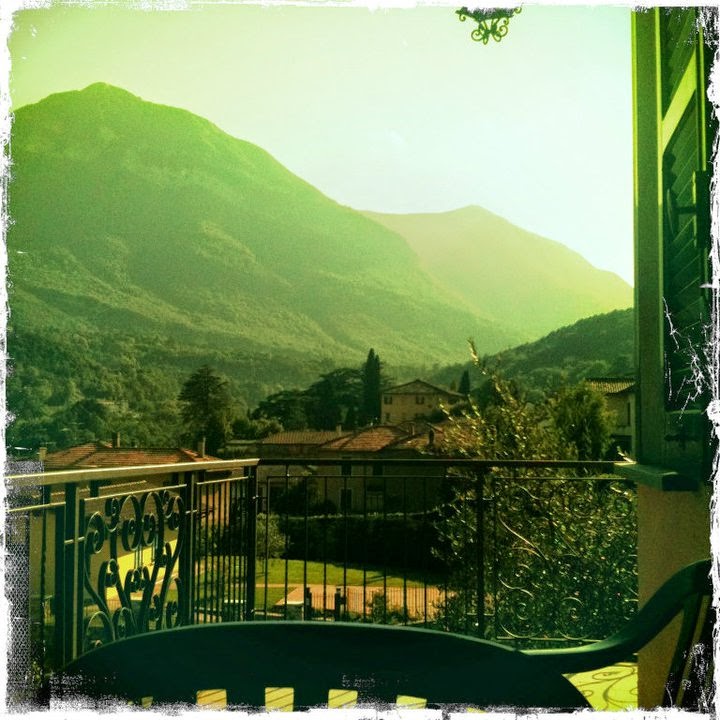
Menaggio is a stunning place to stay - this picture was taken from our villa. Close to where we stayed was a  family-run restaurant called Pizzeria CO.RI (Via Per la Grona 57, Menaggio). The food was very tasty (I had steak and chips with grilled veggies) and the staff were lovely, for dessert I had sorbet with liquor - very nice! We watched an impressive thunderstorm whilst our food settled and the view across the lake was spectacular. Red Bay restaurant is also a nice place to chill, they also have mini-golf next door. I didn't try the food here but they do make a lovely long island ice tea!


Eating In - Menaggio

Pellicano
The supermarket Pellicano had a great selection of gluten free foods, ranging from pasta to breads, desserts to pizza bases and all food products were clearly labelled if they were "senza glutine" (gluten free). Their cherries were moreish too!


Bellagio

Bellagio is stunning. It's only a ferry ride away from Menaggio and I cannot recommend a trip there highly enough. We visited Villa Melzi whilst we were there and both the gardens and views are beautiful (see picture). In Bellagio we stumbled across a great restaurant called Far Out! where I had gluten free four cheese pasta with saffron, which was very tasty! The other place which apparently does very good gluten free options (although I haven't tried it) is Hotel du Lac which is right on the waterfront near the ferry. One thing I will say for Far Out! is always ask the staff whether they have any gluten free pasta in, they're more than happy to oblige but they did need to check in with the kitchen when I asked. 


Milan

We only had one day in Milan, which felt too short in some ways, but we made the most of it anyway. We got the ferry from Menaggio to Varenna and then got a train to Milan (took 40 minutes). A word of caution - make sure you buy your tickets in advance from a news agent and get them validated in this machine (see pic on right). We visited the Santa Maria del Grazie which was stunning, although I'm sad we missed The Last Supper - you need to book at least 6 weeks in advance to see this! We also visited the incredible church Duomo and La Scala - definitely a must see in Milan.

After wandering around for a while we decided to go for a bite to eat and I'd heard fantastic reviews about a place called Bebop. As soon as we entered the lady said 'gluten free'?. 

She must have known we'd travelled specifically to find the place, which we had. They also cater for people who are dairy free, vegans and even my rather fussy parents (Mum doesn't like tomatoes and Dad doesn't like cheese) which is impressive given that it was mostly a pizza restaurant! It was safe to say I was spoilt for choice by their menu, the staff were very friendly and accommodating and on the whole made the experience very special for me. They even did gluten free breadsticks! Main course was a tomato, mozzarella, palma ham and gorgonzola pizza (yum!) and dessert was spicy melon ice cream with handmade biscuits. You can get tram 9 to Bebop (please double check this is up to date).


Bebop, Viale Col di Lana, 4
20136, Milan

On the whole I was impressed by how accommodating Italy was for coeliacs and how friendly people were when you ask for a gluten free meal. Admittedly I've only been to a small proportion of Italy, but it has given me the confidence and inspiration to explore it further in future. Lake Como is an incredibly beautiful part of the world and it's definitely somewhere I'd love to visit again some day...

I do hope this post is helpful for coeliacs visiting Lake Como (Lago di Como) and Milan. If you have any questions just get in touch! 


Sunday, 8 June 2014

Gluten Free Travel: London

After being diagnosed I was a little nervous about eating out when on holiday, as the worry of being glutened was beyond my control. London was my first trip away and so I meticulously scoured the internet for tips and advice on where to eat. Doing your research prior to going on holiday is crucial, especially if you don’t want to starve and spend hours searching for a place to eat on the go. Not fun!  Here are a few places I have tried and tested, plus a couple of extras to try next time.

Feel free to follow my Pinterest gluten-free recipes board for tasty ideas and if you have a sweet tooth you can also check out my gluten-free dessert board too.

Leon – If these guys opened branches in Manchester I’d be eating there all the time! The food is amazing. Tasty, great value, friendly staff and a wicked vibe in all the restaurants. They have about 11 branches throughout London (check website for locations) and the food fills you up for hours – great when you’re on the move and sightseeing! Can be quite busy at lunch time in the smaller Leon branches, but you can choose whether to eat in or take away. Oh, nearly forgot the most important and tastiest part of Leon – their GF brownies! Heavenly. Leon caters for many dietary requirements and preferences: GL - Low  Glycemic load of less than 10/Low Sat Fat - Less than 1.5% per 100g/WF – Wheat Free/GF – Gluten Free/DF – Dairy Free/V – Vegetarian.
Pod Food – Pod Food has about 9 branches all over London (check website for locations). I found Pod great for breakfasts, snacks on the go and salads, for a much needed health kick. The staff are friendly and prices are very reasonable for London. The food ranges from super food healthy salads, hot lunches, wraps to GF cakes.  Pod caters for many dietary requirements and preferences: SF – Super food/LF – Low Fat/V – Vegetarian/ WF – Wheat Free/DF – Dairy Free/GF – Gluten Free.


Honest Burgers make some of the best burgers I've ever eaten in my life, even before I became a coeliac. They provide gluten-free buns for the burgers (which are always cooked medium) the rosemary salted chips are so bloody tasty and the onion rings are huge and more importantly gluten-free! I cannot express how good these burgers are, just go and be prepared to be be wheeled out with a stomach full of tasty food. I love this place and I wish they opened at least one branch in Manchester... The good news is you're always close to an Honest Burgers branch in London - here's a list of locations.


Carluccio's is one of my new favourite coeliac-friendly restaurants. They have branches all over the UK and they have an extensive gluten-free menu. I can't praise this restaurant enough, I've eaten in branches in Manchester and London and the choice is amazing, plus the staff are really helpful and the food tastes great (I have a mega soft spot for their panna cotta!). 


Niche Food & Drink is based near Sadler's Wells in London and is an entirely gluten-free restaurant. We made a special trip across London to eat at Niche and although the food was tasty, the service was not what I would expect from a small, independent place. As soon as we walked in we were asked if we had a reservation (we didn't) and then the gentlemen proceeded to tell us that we could have a table but he needed it back at 1.45pm - not what you want to be told when you've made a special trip and there were at least 6 free tables at that point. Now, I would try this place again as the food was good and there were lots of gluten-free options but I strongly recommend you book in advance, mostly because it seems to be what they would prefer you to do. However, if it's a cheap and cheerful lunch you're after then you might be best going to Leon or Pod Food as it was a little on the £££ side for a lunch, but it was a nice treat.

Wagamama – As you can tell from my post Eating Out: Manchester I love Wagamamas! The food is excellent, great value for money and coeliac-friendly staff. Please check the website for locations and booking information.
 
Other Resources:
Coeliac London – A great site on Facebook for advice on where to eat.  

Thursday, 10 April 2014

Getting Diagnosed and Living with Coeliac Disease.

What is Coeliac disease?

Coeliac disease is an autoimmune disease, not an allergy or food intolerance, that damages the lining of the small intestine and affects the bodies immune system. This autoimmune reaction is triggered by gluten, which is a protein found in wheat (including spelt), rye, barley and oats (although not all coeliacs are affected by oats). In the bowel there are small finger-like projections called 'villi', which help us to absorb all the goodness and nutrients from food that our body needs. In a coeliac these villi become completely smooth and flattened by gluten, which is what causes the coeliac to become very ill.  The treatment for coeliac disease is a strict gluten free diet for life. Gluten is found in everyday foods such as breads, pastas, flours, cereals, cakes, biscuits, sausages (check labels), gravy, stock cubes, soy sauce, beer etc.

Symptoms can include: bloating, abdominal pain, nausea, constipation, diarrhoea, wind, tiredness, anaemia, headaches, mouth ulcers, recurrent miscarriages, weight loss (but not in all cases), skin problems, depression, joint or bone pain and nerve problems (CoeliacUK)  
Click here for a full list of symptoms

Family History:  Coeliac disease often runs in families, but does not run in predictable patterns. If you have a close relative with the condition, such as a parent or sibling, your chance of developing it is higher. This risk is approximately 10% for those with a family history, compared with 1% for someone without a close relative with the condition. If you have an identical twin with coeliac disease, there is an 85% chance you will also develop the condition. Click here for a list of coeliac disease symptoms for children.

Getting the Diagnosis - Blood Tests and Endoscopy

If you suspect you might have coeliac disease then speak to your doctor immediately - it took me years before I found a doctor who would listen to me and who knew about the disease. If your doctor suspects that you might have coeliac disease it is vitally important to keep gluten in your diet in the run up to any blood tests (they usually perform a tissue transglutaminase blood test or 'tTG' test to look for Anti-transglutaminase antibodies) or indeed before the endoscopy itself - this is to avoid any false-negative results and to make sure a proper diagnosis is possible - some doctors recommend eating gluten for up to 6 weeks before any tests take place. Yes, you will feel uncomfortable and whilst it is tempting to cut out the gluten once your blood tests come back positive or 'elevated', you must keep eating gluten to make sure you will get absolute confirmation or diagnosis of coeliac disease from the results of your endoscopy. So power through and don't stop eating gluten until a medical professional tells you to stop - usually the gastroenterologist or dietician... 

After Diagnosis 
 
When you've (finally) been diagnosed you'll probably have a lot questions about the gluten free diet, what you can and can't eat and about coeliac disease itself. It's well worth doing your research and being prepared with some questions when you first see the dietician. It can be a life-changing experience going gluten free, I was diagnosed in December 2009 - I felt alive for the first time in years, my health improved dramatically, I wasn't so tired anymore, I lost just under 2 stone in the run-up to being diagnosed and I finally knew what it felt like to be 'normal' and not suffer terrible stomach pains (amongst other things!) everyday, which is something coeliacs unfortunately get used to, when undiagnosed. It is very important to seek advice and support about going gluten free and the gluten free diet from your dietician and doctor. It is quite common to feel disconnected and sometimes bewildered about where to start and what's normal. Your body will go through quite a transformation after going gluten free and this can be quite disconcerting if you're not sure what to expect. However, for UK patients there are several valuable resources you can use:

Facts and Figures (Statistics taken from a survey of over 1600 Coeliac UK Members, May 2009 – May 2010)
  • The average diagnosis time for coeliac disease in the UK is 13 years!
  • It is thought that 1 in 100 people in the UK have coeliac disease, but a lot of people are not actually diagnosed. 
  • Under-diagnosis is a big problem. Research suggests around 500,000 people have not yet been diagnosed.
  • 60% of people with coeliac disease have been previously misdiagnosed with IBS.
  • According to a CoeliacUK survey: 23% of patients with coeliac disease had visited doctors for 11 years or more and a further 11% of patients having symptoms, visited their doctor for over 20 years before finally being diagnosed. Nearly a third (32%) of respondents said that they thought GP knowledge about coeliac disease was poor or very poor.

Gluten Free Food on Prescription

The next thing you'll notice after discovering what you can and can't eat, is the potential expense of living and eating gluten free. But thankfully supermarkets are beginning to recognise coeliac disease and are creating clearer labels and gluten-free sections. Here are a few manufacturers and resources to help you get started:
But don't despair, you can eat relatively cheaply on a gluten-free diet if you know what to look for - your dietician will help you out with recipes and tips and tricks too. To help with the costs of living gluten free, you are entitled to gluten free food on prescription. Please note, this is only available for people who are medically diagnosed with coeliac disease and dermatitis herpetiformis. Click on the Pre-Payment Certificate link above for more information and to sign up. It costs about £10 per month and you can set up a repeat prescription with your doctor and local pharmacy.

Awareness of Coeliac Disease

Thankfully diagnosis of coeliac disease is on the increase, however many coeliacs (including myself) have been told they have IBS without a thorough examination or further investigation into the symptoms. One of my main concerns, with regards to a lack of awareness of coeliac disease, is some doctors willingness to attribute all adominal symptoms and complaints to IBS and not further investigating why a patient has an irritable bowel. There are numerous reasons why a patient might suffer with abdominal complaints (and other symptoms), but I believe it is vitally important that doctors listen to their patients more and look beyond the 'IBS' label. When I think about how long I've had symptoms of coeliac disease, I can trace some of them back almost 10 years before diagnosis! It was only by chance that I saw a different doctor that progress was made and I had a blood test followed by an endoscopy some weeks later, which subsequently confirmed coeliac disease. My main piece of advise is to persevere - you will find a doctor that will listen to you one day.  

Tuesday, 26 November 2013

Gluten Free Travel: Brighton

I always had a feeling Brighton would be suitable for coeliacs and I wasn't disappointed... 

For our first night in Brighton we ate at Food For Friends, a vegetarian and vegan restaurant with plenty of gluten-free (GF) options on the menu. We settled for the three course menu and they delivered one incredibly tasty meal after another, to be honest we were a little spoilt by how good the food and service was! For starters we both had Shiitake, chanterelle and smoked ricotta patĂ© with red onion marmalade on a homemade toasted (GF) brioche

For the main meal I had a coconut curry with fried aubergine, courgettes and garden peas served with split pea and sesame dumplings, spiced rice and a crunchy fresh papaya, mango and cashew salad - the flavours were amazing! 


They had run out of ice cream for dessert on the set three course menu so the chef kindly offered to make me a dessert from scratch, so.... I chose the lemongrass infused crème brûlée with summer berry salad and a homemade lemon thyme sablé


Although the food sounds 'posh' don't be put off - the food was incredible, the atmosphere was lovely and the staff were very accommodating and friendly. This is definitely one of those places were I wish I had a lot more money so I could have eaten there all the time! 

The next day for lunch we decided to try Iydea on Kensington Gardens and I'm so glad we did! Again a vegetarian restaurant, but the generous portions mean you're full for hours and the prices were very reasonable. I fancied trying a dessert but was always too full to stomach one! It cost about £8 each for a substantial lunch, including a freshly squeezed juice. 


I had sweet potato, chickpea and mushroom massaman, with pesto new potatoes, rice and hummus and my boyfriend had the same massaman curry, green beans with almond and dill, broccoli, roast peppers and rocket salad with a coriander and garlic dressing and tahini roasted seeds on top


First you choose one main dish, then two hot veg or salads, then pick any two toppings.


The food was so good we went back the next day for more! The one thing I will say is space is quite limited so if you want to eat inside you may have to wait for a table, but if you're not so fussed then you can always get your food to go instead. 

On our second night in Brighton we decided to order in to our hotel from Pizzaface. They were so tasty! The choice of ingredients and selection of pizzas they offer, all on gluten-free bases, was staggering. To be honest we were a little spoilt for choice! 
So we could try more than one pizza we ordered both on a gluten-free base. First of all we tried the Jakub pizza - chorizo, pork and wild boar salami, caramelised onion, dollops of mascarpone and a sprinkling of dried chilli flakes and oregano. 


AND we tried the Cuca pizza - mozzarella, smoked mozzarella, shiitake and oyster mushrooms, caramelised onions, rosemary and finished with Napoli salami. Oh and a bottle of wine! 


These pizzas were something special and I kind if wish they had a branch in Manchester... 

I hope this brief intro to gluten-free Brighton helps if you're planning on going. As I was only there for a couple of days I sadly didn't get to try all of Brighton's tasty GF options, so here's a list below of some other options:  

Infinity Foods CafĂ© -  (Breakfast or Lunch)
50 Gardner Street, North Laines, BN1 1UN (01273 670743)


Donatello -  (evening meal - Italian)

1-3 Brighton Place, The Lanes, Brighton, BN1 1HJ (01273 775477)

Pinocchio -  (evening meal - Italian)
22 New Road, Brighton, BN1 1UF (01273 677676)

Al Duomo -  (Italian)
7 Pavillion Buildings, Brighton, BN1 1EE (01273 326741)

Famous Moe’s Pizza – 20 Southover Street, Brighton,  BN2 9UD (01273 676867)

Indian Summer (curry) - 
69 East Street, Brighton, BN1 1HQ (01273 711001)

Love Fit CafĂ© -  (Breakfast or Lunch)
14 Brighton Square, Brighton, BN1 1HD (01273 777941)

The Chilli Pickle (curry) - 
17 Jubilee Street, Brighton, BN1 1GE (01273 900383)

Moorish84 Dyke Road, Brighton, BN1 3JD (01273 777765)

Angel Food Bakery20 Meeting House Lane, Brighton, BN1 1HB (01273 208404)

Thursday, 31 January 2013

Gluten Free Travel

Gluten Free Travel

No matter where you are in the world the same principles apply whether you're eating in or eating out: pre-holiday preparation and research is key to not suffering and starving when you go abroad. I stumbled across a great site which has free coeliac travel cards. They explain what coeliac disease is and what you can and can't eat in 51 different languages, so if you get a little lost in translation on holiday then hopefully these cards will come in handy. I tried them out when I went to Italy this year and they were very useful, as my Italian is quite limited! 

I've recently stumbled across this website Glutenfreeroads.com and I can't recommend it highly enough - it's a great resource for coeliacs who normally struggle to eat out, especially when travelling! It provides listings on a map of where you can eat out, where you can stay that caters for coeliacs and where to shop in most locations around the world :) Check it out fellow coeliacs! Oh and they also have some hints and tips on travelling gluten-free too. 

In-Flight Food

"I am serious...and don't call me Shirley!"
Another hurdle for many coeliacs, particularly on short flights is in-flight food, on long-haul flights you can request a gluten free meal in advance, just contact your airline or select when booking flights. This year I went to Italy in July, we flew to Amsterdam and changed to fly to Milan. Our flight was at 6am, I woke up at 3am had some breakfast, got to the airport about 4am and was unable to find anything suitable in the airport to eat before and during the flight, which meant when I finally arrived in Milan I was extremely hungry and finding something to eat straight away was difficult. By the time we arrived at the villa on Lake Como at 6pm (via Switzerland - long story!) I hadn't eaten a proper meal since 3am! I was feeling faint, dehydrated, tired and almost delusional from the heat and travel. 

Airlines need and should cater for people with dietary requirements, as there are a growing number of people with food intolerances and allergies who are regular and frequent flyers and are paying the exact same price as everyone else on the plane who do get to eat. It's unfair, discriminatory and wrong. A word of advice, always travel prepared with plenty of gluten free snack bars and munchies in your hand luggage, as taking a ready made pasta meal in a Tupperware box on board is not likely to get through security or a sensible recommendation.
Happy Coeliac!

Airlines, restaurants, shops, venues etc are extremely foolish not to cater for coeliacs and people with other dietary requirements as "between 1999 and 2004, the market for organic and 'free from’ retail products grew by 115% to reach £3 billion, a rate five times faster than that of the eating out market". It is estimated that people who have special dietary requirements spend approximately £5 billion on eating out per year and with increasing awareness of dietary issues, companies willing to accommodate for specific dietary needs will be at a distinct advantage. Mintel report, January 2005 (Impact of Diets on Eating Out). 


Travel Recommendations

My list of gluten free restaurants I have explored on my travels are expanding and this is one of the main reasons for starting this blog, alongside wanting to help other coeliacs who struggle for places to eat in the UK and abroad. So far I've posted guides on eating out when in:


I've nearly finished my Lake Como and Milan gluten free guide, will let you all know when it's done. Next year I'm exploring Edinburgh as a coeliac, I went before being diagnosed so this time will be quite different - no traditional shortbread for me!

Friday, 10 February 2012

Leon Gobi - My Favourite Gluten-Free Meal


This is my favourite gluten-free meal/curry of all time!

*Leon Gobi (serves 6 people)

1 medium onion, halved and thickly sliced
1 carrot, thickly sliced
2 tbsp sunflower or peanut oil
1 red chilli (birds-eye if you like it hot!)
2 thumb-sized pieces of root ginger, washed but not peeled
5 cloves of garlic, peeled
1 large tsp Madras curry powder
1 tsp turmeric
1 tsp black onion seeds
1 medium sweet potato, washed and cut into 2.5cm dice
4/5 heaped tbsp ground almonds
A good handful of sultanas
cauliflower, broken into florets and washed
1x 400ml tin of coconut milk
150g frozen peas
Juice of 1/2 a lemon
A really big handful of coriander, roughly chopped
Salt
2 heaped tbsp of desiccated coconut to serve (optional)

  • In a large saucepan, cook the onion and carrot over a medium to low heat in the oil for 15-20 minutes with the lid on, stirring occasionally. 
  • Whilst the onion and carrot are cooking - blitz the chilli, ginger and garlic to a paste in a food processor or pestle and mortar. Stir the paste into the onions once they have begun to soften, along with the spices (Madras curry powder, turmeric and black onion seeds). After another 5 minutes, season with salt, add the sweet potato chunks and the almonds and mix well so everything is coated.
  • Turn the heat up a bit and stir in 500ml of water and the sultanas. Bring to a simmer and leave to bubble gently for 10-15 minutes with the lid off, stirring occasionally. 
  • Add the cauliflower florets and the coconut milk and simmer for a further 10-15 minutes, covered. (If you're eating it with rice - now's the time to put it on!) Check that the sweet potato and cauliflower are both cooked, turn the heat off and stir in the peas.
  • It will need more salt, plus the lemon juice and chopped coriander/desiccated coconut to sprinkle on top.  
*This recipe is from the fabulous Leon restaurant's book, which I cannot recommend enough to everyone I know. 

Enjoy! 

Friday, 7 October 2011

Eating Out: Gluten Free

Eating out can be a real nightmare for coeliacs. After being diagnosed it took me a long time to gain the confidence to eat out and trust that I wasn't going to be 'glutened'. The first takeaway I tried was curry, as most are gluten free (please make sure to check with the staff for cross-contamination) and it was wonderful to feel relatively normal after such a massive transformation in my diet and lifestyle. I knew the diet would test me from time to time and I'd miss quite a lot of my favourite foods, or so I thought. I actually found it easy to substitute most of what I liked with a gluten free version and consequently sticking to a strict gluten free diet was made easier.

Another issue with eating out is a lack of awareness and training among restaurant staff and owners. Too often have I asked waiters and kitchen staff what might be suitable on the menu and to be greeted with blank, expressionless faces enquiring 'what's gluten'? I bet most just think I'm on some fad diet or I'm a fussy eater, but I can assure you I would like nothing more than to stuff my face with anything on the menu and not pay the price of terrible stomach cramps and diarrhoea for several days! 

Lunchtime can also be problematic. Whether it's a working lunch or you’re out and about - preparation is key to not starving or risk being glutened. Wherever possible I bring my own lunches to work, which not only saves me a fortune, but also ensures there is no risk of cross contamination and I can enjoy a healthy and well-balanced diet.

The best thing to do is do your research. Whether you're meeting a friend in town or on a works night out - make sure you can eat something on the menu and that the staff are aware of your dietary requirements. The most important thing to check for when eating out is cross contamination, this also applies when eating at home.
  

Monday, 25 July 2011

Should I eat oats?

Oats
To eat oats or not to eat oats? This is certainly a sticky and controversial area within the Coeliac community, from dieticians, doctors and coeliacs themselves.

When I first visited the dietician and received a guide on coeliac disease and the gluten free diet, the dietician explained what I couldn't eat, which was wheat, rye and barley. However, she did scribble out the last word, which was oats. This was great news, I loved oats and to continue eating them was a treat! However, as many coeliacs know the only oats you can eat (if at all) are the oats that are not cross-contaminated in the milling process with avenin, which is very similar to gluten, and are 'pure' or uncontaminated (always check the label).  Although some coeliacs are so sensitive that even gluten free or 'pure' oats are not suitable. Before I tried them I wanted to make sure my body was healing properly and my tTg (gluten anti-bodies) was on its way down, so I waited a year after being diagnosed before trying, under the supervision of my dietician. This ensured I was entirely gluten free for a prolonged period and if I did have any reaction to oats, it would be obvious.  

Oats are a great source of soluble fibre (for healthy bowel function), it lowers bad cholesterol, is high in protein, regulates blood-sugar levels, reduces high blood pressure and is a great source of B-vitamins.  Is there a down side? Yes. Although oats are tasty, gluten free oats are très expensive! Not to mention the possibility of having a reaction to them. So....should you eat them? Before you do, make sure to consult your dietician/doctor first and if you get the go ahead consider trying them. I'm due for my yearly blood test and although I've had no obvious reaction to GF oats, is it still damaging my gut? It's very hard to tell, besides having another gastroscopy (no thanks!) or blood work done. I am a little concerned, but if my tTg has increased then it will be a sure sign that oats are not for me, in which case I'll be very sad and miss them a lot. 


Pure Oats?
In late September 2011 I bought and consumed practically a whole bag of pure oats, which I later found out were contaminated with low levels of gluten. I had been eating the oats for almost a week and was suffering with terrible stomach pains but was confused as to what was causing it. I stick to a very strict gluten free diet and was very concerned why I was feeling this way. It was not until I read a post on one of the coeliac groups on Facebook that I heard an announcement that some pure oats had been contaminated. I later received a letter from Sainsburys saying:
"We understand from our records that you recently bought our Sainsbury's Freeform Pure Oats 450g. The safety of our customers is extremely important to us. We have identified that a limited number of packets of this product may contain low levels of gluten which has not been declared on the packaging....If you have an allergy or intolerance to wheat or gluten, please do not consume this product and take it back to your local Sainsbury's store for a full refund.....Please accept our apologies for the inconvenience caused".
It turns out that the recall was not just from Sainsburys, 5 different companies had to recall their oats and oats muesli, which leads me to the conclusion they all have the same supplier. Oats are very good for you and should be enjoyed as part of a healthy balanced diet, but when you're a coeliac and putting your trust in supermarkets and gluten free products not to make you ill and they do it knocks your confidence. I will try pure oats again, but it has put me off for a little while.
As a coeliac and a consumer I expect foods that are labelled gluten free to first and foremost  be gluten free, also tested thoroughly for safe consumption and all gluten free products to be baked/cooked/manufactured in a safe gluten free area to eliminate cross contamination.